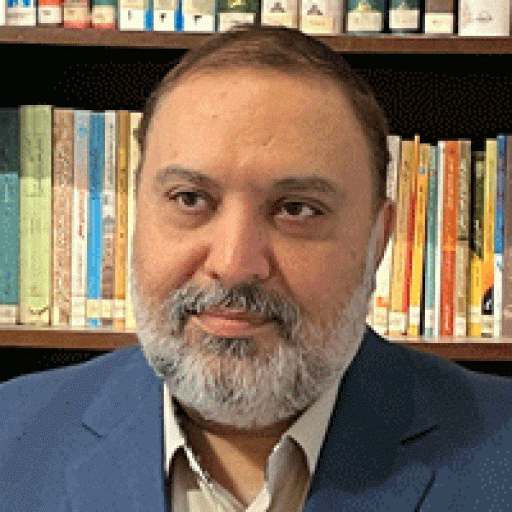
Full Text of the Speech by Assistant Professor Reza Gholami, Faculty Member at the Institute for Humanities and Cultural Studies (IHCS) and Director of the Iranian WisdomHouse in Vienna, Delivered at the Symposium: “Oriental Studies without Iranian Studies: Possiblitty or Impossiblitty?”
Date: September 4, 2026 / Location: Iranian House of Wisdom, Vienna
Before I begin, I would like to express my sincere gratitude to all the professors, scholars, and colleagues who contributed to organizing this symposium, “Oriental Studies without Iranian Studies: Possible or Impossible?”. I would also like to extend a very special thanks to Professor Rüdiger Lohlker for his invaluable efforts, dedication, and support in making this gathering possible.
It has been said that the maps we draw do not merely reflect the world; they shape how we perceive it. When it comes to the academic map of the world, this is profoundly true. Before any discussion of Oriental Studies, one basic point needs to be made clear: it is a mistake to see the East as a single and homogeneous whole. What we call “the East” is a broad and diverse collection of cultures, civilizations, languages, religions, rituals, intellectual traditions, value systems, and historical experiences. Iran, the Arab world, India, Central Asia, Anatolia, East Asia, and other cultural areas cannot be reduced to one single culture. Any attempt to make them all the same would itself be a form of reductionism.
But this leads to a more basic question: if the East is not a homogeneous whole, what has made it possible for such diversity to be placed, throughout history, under one broad name: “the East”?
We must ask whether this name is simply an external label created through a historical process of classification. Or perhaps, beneath this great diversity, there is some kind of continuity, shared horizon, or “invisible umbrella” that allows these traditions to be understood as parts of a larger whole. This invisible umbrella likely does not lie in a complete cultural similarity, but in a certain way of seeing the world and understanding life: different but comparable ways of understanding human beings, the world, nature, the sacred, society, morality, meaning, and the place of human beings in existence. This, of course, is not a final answer, but rather one of the basic assumptions that needs to be examined.
From this perspective, the main task is not to prove that “the East” is one single culture. Rather, we should ask whether, beneath its great diversity, there is some shared cultural, civilizational, or meaningful horizon that makes the idea of “the East” more than simply a geographical label.
This point also makes the relationship between Iranian Studies and Oriental Studies more important. If the East is not homogeneous, but at the same time may have some kind of internal continuity or shared horizon, then we need to study both its internal differences and the historical and meaningful relations among these differences.
At the same time, understanding Oriental Studies itself requires a balanced approach. We should neither reduce its entire history to power and politics nor ignore the role of power, politics, and historical conditions in the formation of some of its concepts and institutions. Being a scientific field does not necessarily mean that all its researchers are completely neutral. Rather, its scientific character depends on the strength of its methods, the possibility of criticism, the clarity of its assumptions, the diversity of its views, and its ability to correct itself.
But before judging the neutrality, bias, or methodology of Oriental Studies, we need to ask a more basic question: What kind of reality is its subject — that is, “the East”?
We must explore whether the East is a historical and cultural reality that existed independently of processes of knowledge and representation, or if what we call “the East” receives at least part of its meaning through processes of naming, classification, and encounter. If both are involved, understanding the relationship between historical reality and its discursive representation becomes crucial.
Every discussion about how we know the East contains, at least implicitly, some assumptions about what the East is. Therefore, before asking only how we know the East, we should explore how the East exists, what constitutes it, how it becomes distinct, what internal relations have shaped it, and how it stands in relation to the Other.
On this basis, we can raise at least the following seven basic questions. This list should not be seen as closed or final; other questions will naturally emerge through further academic discussion.
- The Question of the Being and Identity of the “East”
If the East is a diverse collection of cultures, civilizations, and traditions, what kind of existence does this whole have?
We need to determine whether “the East” is simply a convenient name for a group of different societies, or if it possesses a genuine historical and cultural identity. If such an identity exists, we must examine what forms it—whether it stands independently, or if its meaning is shaped largely through its relationship with the “Other.” Ultimately, we must figure out if we can speak of a shared horizon that places this diversity within a larger, understandable whole without erasing its internal differences.
- The Question of the Cultural, Traditional, and Discursive Foundations of the “East”
What cultural and civilizational foundations lie beneath this diversity?
We must assess the role that philosophical traditions, religions, languages, historical memory, and social patterns have played in shaping what we call “the East.” We can see this, for instance, in the legacy of the Silk Road, which was never merely a trade route for goods, but a vibrant corridor for the exchange of religions, artistic forms, and mystical traditions among Iran, Central Asia, Anatolia, and South Asia. By looking closely at such connections, we can observe whether their comparable ways of relating to the world, nature, and the sacred form that “invisible umbrella” beneath the region’s cultural diversity. Of course, we must also test whether this idea of unity is itself a modern construction. The aim here is not to force a unified image of the East, but to explore whether, beneath the differences, there is some kind of unity at the level of worldview.
- The Question of Diversity, Imbalance, and Internal Relations within the East
Have Eastern cultures and traditions been studied and represented with equal attention and importance?
Historically, certain traditions have been given a central place in accounts of the East, while others have been pushed to the margins. More importantly, we must analyze the profound relationships Eastern cultures have had with one another. There is a rich history of exchange, influence, translation, and cultural mixing among them. For instance, consider the historical journey of texts like Kalila wa Dimna—originating in India, translated into Middle Persian, and later becoming a cornerstone of Arabic literature. This was not merely the migration of a book, but a profound sharing of ethical and political philosophy across different “Easts”. Therefore, the East should not be studied only through the simple opposition of “East and West”; the history of the East is also a history of relations among the different Easts.
- The Question of Reality and Construction: Where Is the Boundary?
To what extent is what we call “the East” based on historical realities, and to what extent has it been shaped through conceptual and academic processes?
We need to determine if Oriental Studies simply discovers and describes an already existing reality, or if it actively takes part in naming and defining that reality. Here we should avoid a simple either/or choice. The East undoubtedly has a historical reality, while at the same time, particular images of it are created through representation. The main issue is understanding the delicate balance between reality, interpretation, and construction.
- The Question of the “Other” and the Purpose of Knowledge
How has the West historically seen, and how does it currently see, the East?
We must critically examine whether the East is viewed simply as a different “Other,” a rival, a threat, or a complex world that needs to be understood. If there has been a drive to know the East, it is crucial to uncover the underlying purpose of this knowledge. Knowledge can serve superiority and control, but it can also aim at dialogue and coexistence. These two directions influence the institutional environment and methods of Oriental Studies. Therefore, Oriental Studies must ask not only what the East is, but also for whom, from what perspective, and for what purpose it is being studied.
- The Question of the Historical Formation of the East and Oriental Studies
What historical, political, colonial, and intellectual conditions played a role in the formation of the modern idea of “the East” and in turning it into an academic subject?
Here we need to distinguish between two histories: the history of the formation of Eastern cultures themselves, and the history of the formation of Oriental Studies as an institution. Oriental Studies is a product of a particular recent history, but its subject has a much longer and more complex past. The ways in which these two histories have influenced each other is itself a vital field of research.
- The Question of the Consequences for the Map of Oriental Studies
If the East is a diverse, multi-layered reality with internal historical connections and a shared horizon of meaning, how should the map of Oriental Studies be drawn?
We must reconsider whether we should still understand Oriental Studies mainly through the simple opposition between East and West. Instead, it may be time to develop a map that simultaneously shows the diversity within the East, the relations among Eastern cultures, and the long history of encounters with the West. And within such a comprehensive map, defining the exact place of Iranian Studies becomes a pivotal issue.
From the Ontology of the East to a New Map of Oriental Studies
These questions lead us to a basic point: the map of Oriental Studies is not simply a map of academic disciplines. Behind this map lies an idea of what the East is, how we relate to the Other, and why we seek knowledge about the Other.
If the East is seen as a homogeneous whole, the map will move toward broad and simplifying classifications. If it is seen as a collection of completely separate cultures, their historical connections will be ignored. But if we understand the East as a diverse collection of civilizations that have interacted throughout history while sharing a common horizon of meaning, the map of Oriental Studies must become more complex and multi-layered.
At the same time, the way the West sees the East is also part of this map. Treating the East as a “rival” to be controlled yields a very different academic structure than treating it as a cultural world worthy of mutual understanding. Therefore, the ontology of the East, the way the East is viewed, and the purpose of knowing the East are three basic layers in the formation of the map of Oriental Studies.
Iranian Studies within This Map
Within this framework, the relationship between Iranian Studies and Oriental Studies cannot be defined simply by asking which part of Oriental Studies belongs to Iranian Studies.
The deeper question is: What place does Iran have in the ontology of the East, and what does Iranian Studies reveal about the very idea of the East?
Iran cannot be understood simply as an isolated “Eastern subject.” It is one of the important historical centers of the production and transmission of thought, language, art, and civilizational experience. Throughout history, Iran has interacted not only with the West but also with many other cultural areas of the East.
For this reason, Iranian Studies has a dual role: it is an important field for studying the East, but by showing the complexity and internal relations of the Eastern world, it can actually question and reshape the map of Oriental Studies itself.
The relationship between the two is therefore two-way: The ontology of the East helps determine the place of Iranian Studies, but a new understanding of Iran can change our very idea of the East.
In the end, rather than simply asking what place Iranian Studies has within Oriental Studies, we must examine how the East has been imagined as a meaningful whole, how its cultures have interacted, and how Western assumptions have shaped this field.
This brings us to the ultimate question:
Should Iranian Studies simply accept the place assigned to it by the existing map of Oriental Studies, or can it take an active part in redefining the ontology of the East and redrawing that map through a new understanding of Iran and its historical relations?
These questions are not closed or final. What is presented here is a set of basic inquiries to serve as the starting point for a broader academic dialogue. Perhaps the main issue today is not only to find new answers about the East, but to reconsider the very questions through which the East has been known for centuries.
From this point of view, rethinking the relationship between Iranian Studies and Oriental Studies moves beyond a discussion about academic boundaries. It becomes a philosophical inquiry into the being of the East, the diversity of cultures, our relationship with the Other, the purpose of knowledge, and the possibility of redrawing the map of knowledge itself.
Thank you for your attention.