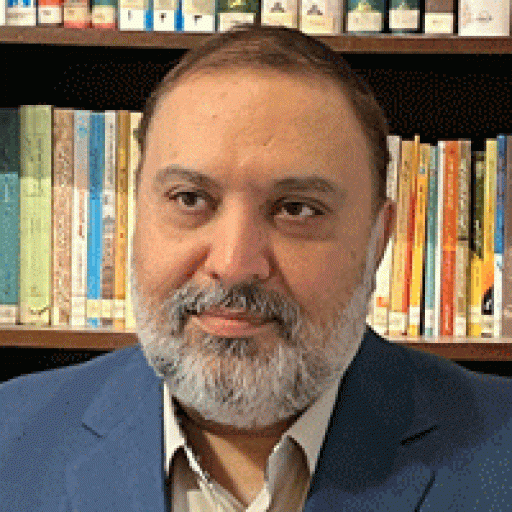
Dr. Reza Gholami
Introduction: The Paradox of the Modern Era
The contemporary world is caught in a clash between progress and regression. On one hand, advanced technology, instantaneous communication, and globalization have dissolved geographical and temporal boundaries, transforming the world into a single global village. On the other hand, these apparent advancements have failed to bridge the deep ethical and human divides. The boundaries of conscience, empathy, and responsibility have not only persisted but, in many parts of the world, have become more rigid and impenetrable than ever before. At this critical juncture in history, one fundamental principle demands urgent reaffirmation: human responsibility is the highest duty that humanity owes to itself and the world.
This responsibility is neither an optional choice nor an imposed obligation but an intrinsic essence of human existence. As long as a flicker of humanity glimmers in our hearts and minds, this responsibility calls us toward empathy, justice, and action. As beings endowed with reason and conscience, humans are indebted to this commitment—a commitment not only to their fellow beings but to the entire ecosystem and the future of humanity.
The Consequences of Neglecting Human Responsibility
The history of humanity bears clear witness: whenever human responsibility is sidelined, three destructive phenomena emerge:
- Darkness: The extinguishing of the light of collective reason and conscience, paving the way for ignorance, prejudice, and selfishness. This darkness casts a shadow over collective wisdom, distancing humanity from its lofty values.
- Enslavement: The restriction of fundamental freedoms, from freedom of expression and thought to the right to choose and live freely. This enslavement traps individuals in the chains of ideologies, autocratic systems, or oppressive structures.
- Atrocity: The violation of basic rights and human dignity, manifesting in war, genocide, discrimination, and systemic injustice. These atrocities inflict deep wounds on the fabric of humanity, wounds that may take centuries to heal.
Wherever these three phenomena arise, the footprint of forgotten human responsibility can be traced. From global wars to contemporary tragedies, this pattern has repeated itself time and again.
The Legal and Ethical Foundations of Human Responsibility
Human responsibility is rooted in the fundamental rights that form the basis of human dignity. These rights are neither privileges that can be revoked nor gifts bestowed by authorities; they are inherent to human existence. The most critical of these rights include:
- The Right to Life: The most fundamental right, without which all other rights lose meaning. Every human has the right to live, regardless of race, nationality, or belief.
- The Right to a Homeland: The sense of belonging to a land, culture, and identity, which grants humans a sense of security and rootedness.
- The Right to Basic Necessities: Access to food, clean water, shelter, education, and healthcare as prerequisites for a dignified life.
- The Right to Think: Freedom of thought, belief, and the pursuit of truth, which forms the essence of humanity.
- The Right to Expression: The ability to voice opinions, ideas, and protests freely, without fear of repression.
These rights constitute the pillars of human responsibility. Human responsibility entails a commitment to upholding and safeguarding these rights for oneself and others—a commitment rooted in the very nature of humanity, demanding a resolute response to any violation.
The World Today: Why Returning to Human Responsibility Is Essential
The world today is more than ever engulfed in ethical and human crises. Evidence of these crises is visible across the globe. Below are examples that underscore the urgent need to return to human responsibility:
- The Genocide in Gaza: The brutal killing of defenseless civilians, children, and women in Gaza is a glaring example of global ethical collapse. Human responsibility cannot remain silent in the face of such atrocities. This tragedy is not only a violation of human rights but a warning to the world that indifference is complicity in crime.
- Attacks on Iran and Violations of International Law: Israel’s assault on innocent Iranian civilians, based on unproven claims—such as Iran’s alleged proximity to developing nuclear weapons—resulting in over a thousand deaths in 12 days, coupled with the United States’ attack on Iran’s nuclear facilities, a member of the Nuclear Non-Proliferation Treaty (NPT), exemplifies the trampling of international norms. These actions are not only blatant violations of global laws but also a sign of disregard for human responsibility in preserving peace and justice.
- Violation of International Laws by Powers: Politicians and leaders in many parts of the world shamelessly flout international laws, from breaching global treaties to ignoring United Nations resolutions. These actions reflect a global moral decline.
- The Paradox of Humanitarian Aid: While food and humanitarian aid are sent to some crisis-stricken regions, violence and killing continue unabated in those same areas. How can one open fire on starving people standing in long queues for food? This horrific paradox reveals the depth of the ethical crisis—how can aid be delivered to people who are simultaneously under fire and bombardment? This contradiction is not only a violation of human dignity but a sign of the collapse of global conscience.
- The Revival of the Law of the Jungle: Some global powers and actors, by promoting force and domination, have imposed the law of the jungle on international relations. When permanent members of the United Nations Security Council themselves engage in warmongering and violate international laws, what hope can the people of the world cling to? This situation underscores the need to resist lawlessness and rebuild an order based on justice.
- The Threat of Modern Tyranny: In many parts of the world, signs of resurgent autocracy, repression, and tyranny are evident. From media censorship to the suppression of protesters, these threats signal attempts to resurrect oppressive systems, which human responsibility deems unacceptable.
- The Silence of Intellectuals and Philosophers: It is deeply regrettable that many intellectuals and philosophers across the globe, who should be torchbearers of awareness and enlightenment, remain mere spectators of the world’s crises. Out of fear of losing personal interests, social standing, or security, they have sealed their lips and distanced themselves from their historical mission of critiquing power and defending justice. This silence is not only a betrayal of human responsibility but also fuels the spread of darkness and injustice. Intellectuals, as the awakened conscience of society, are duty-bound to courageously and honestly amplify the voice of truth.
The Solution: Reviving Human Responsibility
To overcome these crises, the world needs a return to human responsibility. This return is a multi-step process that can pave the way for a brighter future for humanity:
- Awareness-Raising: Deep recognition of human responsibility and the understanding that it is not a choice but an inherent duty. This awareness must be spread through education, dialogue, and enlightenment in societies. Intellectuals and thought leaders have a pivotal role in this stage and must move from passivity to action.
- Acceptance: Embracing this responsibility as an inescapable commitment. Every individual must hold themselves accountable for their fellow humans, the environment, and future generations.
- Action: Translating awareness into tangible actions, from aiding the needy to standing against oppression and injustice. These actions can take place on small or large scales.
- Perseverance: Sustaining this responsibility despite challenges and obstacles. Perseverance in this path is the key to success in reviving human values.
The Path of Hope: A Future Rooted in Responsibility
If human responsibility once again takes root in the hearts and minds of societies, we can hope for a future in which:
- Human Dignity is universally respected.
- Lasting Peace replaces war and violence.
- Justice becomes the cornerstone of global relations.
This future is not an unattainable ideal but a goal achievable through collective effort and commitment to human responsibility.
The Path of Darkness: Persisting in Indifference
However, if this responsibility is ignored, the world will accelerate down the slope of moral and human decline. Indifference to oppression, war, and human rights violations not only fails to resolve problems but fuels the spread of darkness, enslavement, and atrocity. This path will lead to a future where human civilization hurtles toward collapse.
Call to Action: The Choice Is Ours
Returning to human responsibility is not only a moral imperative but a prerequisite for the survival of human civilization. In an era where contradictions and crises deepen daily, the only path to salvation is the revival of this responsibility in the heart and mind of every conscious individual. This is a call to all—ordinary citizens, intellectuals, philosophers, and global leaders—to reassess their role in the world and commit to the values that elevate humanity. The silence of intellectuals and the passivity of elites are part of the crisis; now is the time for them to step forward courageously and amplify the voice of justice and humanity.
The choice is ours: either return to human responsibility and build a future filled with hope, justice, and peace, or persist in indifference and descend into darkness and destruction. History is an unforgiving judge that will record our choice. Now is the time to choose the path of hope with awareness, courage, and action.