A multi-level analysis of the individual, institutional, and ideological factors that hold back peace
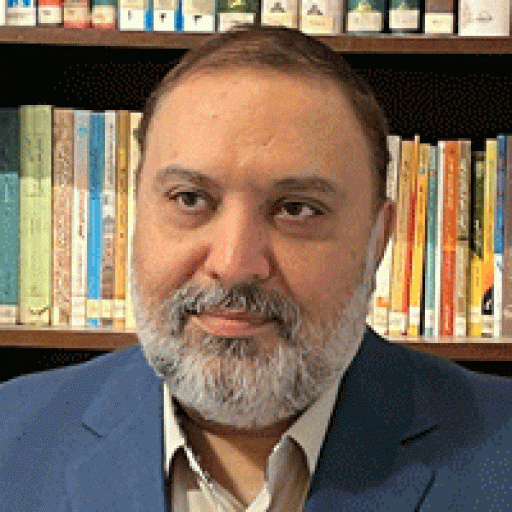
Text of the speech by Dr. Reza Gholami, Iran’s cultural representative in Austria and faculty member of the Institute for Humanities and Cultural Studies, at the online scientific meeting “Why has peace become difficult?”, University of Religions and Denominations, 30 Shahrivar 1405
In the name of God
Hello and warm greetings to you, dear viewers and listeners. I thank Dr. Yazdi and the respected International Affairs Department of the University of Religions and Denominations for giving us this chance on the International Day of Peace. Peace is one of the most important reasons wise human beings build societies, and it is good that we use every opportunity to talk about peace. Because time is short in this kind of talk, I prefer not to speak in a scattered way. Instead, I will present my views in eighteen points under the title “Eighteen Fault Lines of Peace.” I hope they will be useful. By “fault line” here I mean the obstacles that have stopped us from reaching peace:
First. Extreme individualism: Peace needs a sense of shared responsibility. Extreme individualism puts personal gain in place of the common good and slowly destroys the eagerness and togetherness that lasting peace requires.
Second. Absolute certainty about knowledge: When each side believes it alone holds the absolute truth, negotiation turns into forcing one’s view on others. In such a situation, peace becomes only a formal and fragile agreement.
Third. The decline of reason-based dialogue: When rational competition is replaced by hostility based on identity, the shared space for decision-making disappears. The other side is no longer a rival but an enemy.
Fourth. Domination in dialogue: Constructive dialogue is based on listening. When it is replaced by dominant dialogue, conversation turns into a tool of psychological warfare.
Fifth. Unbalanced nationalism: When national identity loses its balance and becomes an ideology of superiority, the line between “defending oneself” and “denying the other” disappears.
Sixth. Lack of the structural requirements for peace: Peace is not simply the absence of war. It needs economic, legal, and institutional foundations that simply do not exist in many conflict-affected regions.
Seventh. The political economy of war: When war is profitable for some actors, human beings become commodities and war becomes a business model. This structural profit sees peace as its economic rival.
Eighth. Uncontrolled human management of emerging technologies: Technologies such as artificial intelligence are developed without enough ethical and supervisory rules. When decision-making leaves human control or serves only limited powers, tools of peace can easily become tools of domination. As Geoffrey Hinton, the Nobel Prize winner whom some call the father of artificial intelligence, has said, we are now in a situation where if reasonable laws for superintelligent AI are not made in the world within the next year, in the years that follow we will face all kinds of violent and deadly conflicts coming from this very source. I would like you to take this statement as a real warning.
Ninth. Weapons and new technologies of war: Continuing from this lack of control, the unchecked growth of the arms industry, autonomous weapons, and cyber warfare has lowered the threshold for entering conflict and made traditional deterrence ineffective.
Tenth. Environmental crisis and resources: Water shortages, climate change, and competition over natural resources create conflicts that are essentially economic and ecological, yet they appear under the cover of identity or religion.
Eleventh. Ineffectiveness of global governance institutions: Institutions such as the Security Council, with their veto structure, have become tools of the interests of major powers instead of neutral mediators, and leave peace without a real guarantee.
Twelfth. The suspension of civilizational maturity in redefining the Security Council: Lasting global peace requires humanity to reach a level of civilizational maturity that redesigns the structure of the United Nations around peace. This means a Security Council whose members are chosen by democratic vote and on the basis of competence, not military power or the legacy of the Second World War, and in which there is no veto right. The fundamental contradiction of the present situation is this: most of those who hold the veto are themselves among the main igniters of wars in the world. The tool that should guarantee peace is in practice in the hands of the same actors who benefit from the continuation of crisis.
Thirteenth. The defectiveness of democracy in some developed countries: When democratic processes are reduced to the game of military-industrial lobbies, media that profit from tension, and concentrated political capital, the real voice of peace-loving people in society is not heard in major decisions about war and peace. Democracy changes from a tool for representing the public will toward peace into a cover that gives legitimacy to the already decided policies of power, and under the surface of democracy, authoritarianism takes root.
Fourteenth. Covering up the North-South gap: Development inequality, instead of being solved, is hidden in diplomatic discourse. A peace that does not see the root of inequality only postpones the crisis.
Fifteenth. Double standards in dealing with human rights: The global reaction to human rights violations and victims of war is not based on a single human standard. Instead, it is decided by the skin color, geography, geopolitical belonging, and even the religious affiliation of the victims. The suffering of non-white people, those living in the Global South, or followers of certain religions and denominations is seen less, narrated less, and condemned less. The same violations in other societies or among followers of other religions receive different intensity and speed of media coverage and legal pursuit. This selectivity is rooted in a kind of institutionalized and hidden racism and religious discrimination that fundamentally damages the moral credibility of the international human rights system and turns peace into an unequal privilege for some nations and followers of some religions.
Sixteenth. Forgetting restorative justice and unresolved traumas: Peaces that only stop the violence and do not deal with collective wounds and historical hatreds are merely fire under the ashes.
Seventeenth. The decline of intellectualism and blind consumerism: The sidelining and absence of Socratic men and women, the lack of an independent current of reasoning, and the dominance of a culture of consumption and imitation empty society of critical thinking about war and peace as well. These conditions will become worse in the future with the onslaught of newer technologies.
Eighteenth. Distortion of the mission of religions and irrational ideals: Religions, if they believe in religious pluralism, have the moral and unifying capacity for peace. Of course, when they become tools for creating differential identity, or when in some of their internal currents irrational apocalyptic ideals for domination over a region or even the whole world are cultivated, they themselves turn into the source of the deepest and most lasting conflicts. For this reason, it is very important that followers of religions, through continuous self-reflection, evaluate their role toward peace and remain committed to it.
Summary
This discussion examined the multi-faceted obstacles to peace in the contemporary world at three analytical levels and showed that peace is not a negative state (the absence of war), but a positive structure that needs cultural, intellectual, economic, and political foundations.
At the cultural-social level, extreme individualism, absolute certainty about knowledge, the decline of dialogue and reasoning, together with the distortion of the mission of religions and irrational domination-seeking ideals, weaken the foundations of human solidarity.
At the economic-technological level, the profit of the war economy for interested actors, along with the uncontrolled human management of technologies such as artificial intelligence and the expansion of new weapons, has turned potential tools of peace into tools of domination.
At the governance and rights level, the structural inefficiency of the Security Council — caused by the inherent conflict of interests of those who hold the veto right —, the deviation of democracy’s function from representing the public will, double standards in the application of human rights, and the ignoring of developmental gaps and environmental crises have paralyzed the legal and institutional guarantees of peace.
In the end, overcoming these obstacles requires humanity to reach a higher level of civilizational maturity, a fundamental redesign of the United Nations based on equality and the removal of structural privileges, the governance of ethics over technology, and the realistic healing of historical wounds through restorative justice — a process that is not an optional choice, but the condition for the common survival of humanity.
Thank you for your attention.