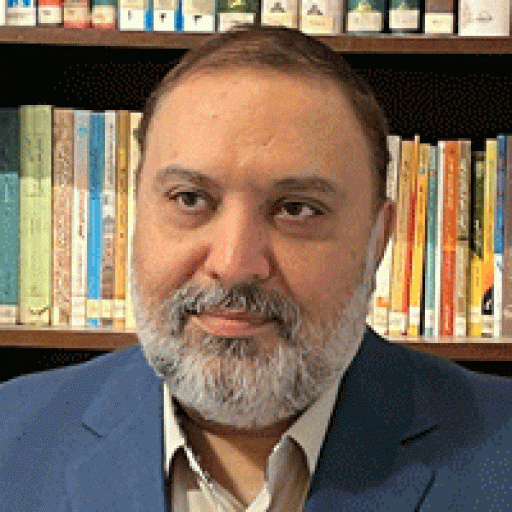
Full Text of the Speech by Dr. Reza Gholami, Assistant Professor, Institute for Humanities and Cultural Studies
Delivered at the Conference “Religious Identity and Global Identity”,16 October 2026 | Iranians Wisdom House, Vienna, Austria
Good evening every body,
The world is entering a stage of change that is different from the changes of the twentieth century and even from the early decades of the twenty-first century. The future is no longer simply something that lies ahead of us; part of it is already being shaped today, through the choices, technologies, and structures that we are creating.
But the point is that we are not always the ones who choose all the available options. New technologies, especially artificial intelligence, enter our lives even when we have not decided to bring them in. In this sense, the question of the future is not only a question of “What do we want?” It is also a question of “What options are now being created?”
This issue is especially important for religions. Artificial intelligence is not simply a technical tool that exists outside the field of religion. It can gradually become an automated spiritual adviser, an interpreter of texts, a producer or transmitter of religious judgments, and a means of shaping the way people understand religion. Recommendation algorithms can also influence which interpretations of a religion people see more often and which interpretations they see less.
At the same time, the automation of work raises new questions about meaning, human dignity, and the role of human beings. And perhaps most importantly, artificial intelligence models themselves are built on data and values that are not completely neutral. Therefore, there is a possibility that a kind of hidden and rigid ideology may enter human life, not through an official belief system, but through the design and data of artificial intelligence systems.
Under these conditions, the question of “global identity” is no longer an abstract question.
Global identity, in one sense, is already being formed today. Millions of people, especially younger and more educated generations, communicate with one another every day through social media, shared languages, music and cinema, jokes, patterns of consumption, and even shared anxieties and hopes.
But the basic question is: Who defines this identity?
If “global” in practice means extending one culture, one way of life, or one particular image of the human being to the whole world, then we are not facing a global identity; we are facing the globalization of a local identity.
This is where intercultural philosophy becomes important. In the context of intercultural philosophy in Vienna, Franz Martin Wimmer developed one of the important formulations of this approach. From this perspective, philosophy cannot begin by taking one culture as the standard for the world and then judging other cultures according to how far they are from that standard. The idea of “polylog,” or multi-sided dialogue, emphasizes that the universal should be built through dialogue, rather than assumed in advance.
Raimon Panikkar, Ram Adhar Mall, and other intercultural philosophers have also emphasized this need, each in their own way: cultures are different, but this difference does not mean that they have no connection with one another. They can understand and translate one another and, while remaining different, take part in creating a shared meaning.
This is where the question of religious identity also takes a new form.
Religious identity should not necessarily mean remaining exactly the same. Paul Ricoeur, in his discussion of identity, distinguishes between identity as sameness and identity as maintaining oneself through change. A person can change over time and still remain the same person.
With caution, we can use this idea to think about religious traditions as well: a living tradition is not a tradition that never changes; it is a tradition that can maintain and reinterpret its relationship with its basic elements through change. Of course, this is an extension of Ricoeur’s discussion and should not be presented as exactly his own view about religions.
On the other hand, human identity is basically multi-layered. Amin Maalouf and Amartya Sen, in different ways, have warned against reducing a human being to a single identity. A person can at the same time belong to a family, a language, a country, a culture, a religion, a profession, and different human networks.
In the age of platforms, identity has gained even more dimensions. Part of our identity is what we present about ourselves, and part is what algorithms extract and represent from our behavior.
Under these conditions, two dangers appear at the same time.
On the one hand, there is the danger of becoming more and more alike: cultural and religious differences may disappear into a global consumer culture. On the other hand, there is the danger of building walls: in response to this process of becoming alike, religious and cultural identities may turn into closed fortresses and define themselves only by rejecting the other.
Benjamin Barber described these two movements through the idea of “Jihad and McWorld”: on the one hand, globalization and standardization, and on the other, the return to closed and aggressive identities.
Religions can also face both dangers: they may either become commodities in the global market of meaning, or become fortresses for an angry defense of identity.
In response to these two dangers, I speak of the possibility of “creative transformation.”
For a religious tradition, at least four possible futures can be imagined: dissolving and losing its identity, becoming private and withdrawing from public life, building a fortress and becoming isolated, or undergoing creative transformation.
By creative transformation, I do not mean that a tradition should accept everything. In order for a change to be considered a transformation of a tradition, at least four important criteria are needed: first, continuity with the basic commitments of the tradition; second, methodological legitimacy within that tradition; third, the possibility of recognizing it historically as a continuation of the same tradition; and fourth, its ability to produce meaning and offer answers to new problems.
The history of religions shows that such transformations are possible, but they are not guaranteed. Religious traditions have repeatedly reinterpreted themselves throughout history, but every successful reinterpretation has also been the result of a complex historical process.
The problem today is that the speed of change has become much greater. There is less time for trial and error, and technology can establish new structures of life before traditions have the opportunity to respond.
Here we must also pay attention to another principle: diversity is itself a value.
Of course, religions speak about truth from within their own traditions, and each religion can make its own claim to truth. But in the public sphere, even people who do not belong to a particular religion can value religious traditions as sources of meaning, ethics, and human experience. This point can be found in the works of Jürgen Habermas, especially in his discussion of “Faith and Knowledge” and later in “Religion in the Public Sphere.”
But for real dialogue, differences are not the only thing that matters; common ground also matters.
In almost all major religious and ethical traditions, we can find forms of a principle that is known today as the “Golden Rule”: treat others as you would like to be treated. With different formulations, this principle can be found in Judaism, Christianity, Islam, Confucianism, and other traditions.
There are also ideas such as human dignity, honesty, helping the weak, avoiding greed, and responsibility toward others that can serve as a basis for shared dialogue.
These common elements are not meant to replace religious identities. They should become a platform for cooperation.
For example, in the ethics of artificial intelligence, these shared resources can provide a basis for discussing dignity, justice, responsibility, deception, discrimination, and limits on power.
But dialogue with the other is not enough without inner purification.
Religions must be able to distinguish within themselves between the ethical and spiritual core of their traditions and elements that have entered religion throughout history in the form of superstition, abuse, deception, or exploitation.
This does not necessarily mean abandoning tradition. Religious traditions themselves have tools for internal criticism and purification. In many of them, reason, conscience, moral experience, and even criticism of blind imitation are part of the religious heritage itself.
This issue becomes even more important in the age of artificial intelligence, because artificial intelligence can reproduce not only religious information, but also our image of religions.
An important study in 2021 on GPT-3 showed that, at that time, the association of violence with Muslims appeared consistently in the model’s outputs. Therefore, the issue is not only what artificial intelligence says about religion; the issue is also what data and patterns cause a religion or a religious group to be represented in a particular way.
At the same time, there is also a concern that the digital representation of religion may, in other circumstances, be influenced by false information, superstition, or unreliable narratives. More independent research is still needed on the scale and extent of this problem.
So there is both a danger of distortion and bias, and a danger of simplifying religion and taking away its substance.
Some religious institutions and representatives have already entered this field. The “Rome Call for AI Ethics” began in 2020 and was later expanded through the participation of representatives of the Abrahamic traditions and then other religious traditions, including at the Hiroshima meeting in 2024.
But despite their importance, these efforts also have limitations: many of them are voluntary and non-binding; they may lead to “ethics-washing”; and the question of representation remains: Who speaks on behalf of a religion?
For the responsible participation of religions in dialogue with technology companies, at least four conditions are important: plurality, independence, objectivity and measurability, and mutual accountability.
This means that no tradition or group should present itself as the representative of the whole religion; religious institutions should not simply become tools for giving legitimacy to companies; ethical principles should, as far as possible, be explainable and measurable; and companies should also be accountable to society and to religious institutions.
In this context, the idea of “awakening” has a special importance.
Awakening, on the one hand, means becoming aware of the changes that are taking place; and on the other hand, it means awakening reason.
In the Nahj al-Balagha, when describing the mission of the prophets, it says:
“وَ یُثِیرُوا لَهُمْ دَفَائِنَ الْعُقُولِ”
That is, to bring out the hidden treasures of human reason and awaken them.
This expression has an important meaning for our time. The question is not only what religions should say in response to artificial intelligence; the question is whether they can keep human beings sufficiently awake so that they can judge these technologies, their own identity, and their own future.
Throughout history, religious institutions have sometimes helped to strengthen habit, passivity, or imitation instead of awakening human beings. But at the same time, different religious traditions have also contained various forms of awakening reason, reflection, questioning, and internal criticism.
Therefore, if we want to take seriously the role of religions in the age of global identity and artificial intelligence, I believe there are at least six requirements:
First, intra-religious dialogue and inner purification;
Second, accepting plurality without falling into unlimited relativism;
Third, using common ground as a platform for cooperation, not as a replacement for identities;
Fourth, the ability to translate religious ideas into language that can be understood in the public sphere;
Fifth, plural and accountable representation in dealing with technology companies and institutions;
And sixth, above all, keeping human beings awake.
Because the final issue is not simply the future of religions.
It is the future of humanity.
We do not know what place religion will have in the coming decades. Some religions may become increasingly private, some may dissolve into global culture, and others may take new forms of identity.
But one thing is clear: if religions wait until the new world has been completely built and only then begin to speak about it, they will lose a large part of the opportunity to participate.
But if they enter the dialogue earlier, if they can preserve their identity while also engaging in dialogue, criticizing, translating, and learning, they can at least take part in defining what is going to be called “global.”
Globalization should not mean making the world without colors.
Perhaps, at the end, we can read Rumi’s words in a way that speaks to our own time:
“چون که بیرنگی اسیر رنگ شد
موسیی با موسیی در جنگ شد”
“When the colorlessness became captive to color,
one Moses went to war with another Moses.”
The point may not be to remove the colors. The point is to prevent the colors from becoming so closed within themselves that the very possibility of dialogue disappears.
Religions can preserve their own colors, while at the same time entering into dialogue with other colors; getting to know them, criticizing themselves, and learning from one another.
Perhaps global identity, if it is truly to be global, will not be formed by removing differences, but by our ability to live with differences and create shared meaning from within them.
Thank you for your attention.