“A symbol of life, flow, and connection among cultures”
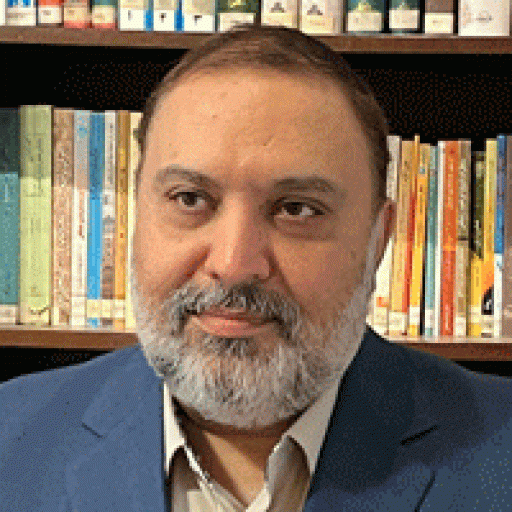
Speech by Dr. Reza Gholami at the “Tao of Water” Exhibition
Good afternoon everyone.
It is an honor for me to be present at this international cultural and artistic gathering and to speak about water, the life-giving element, and its place in Iranian culture and civilization.
1. Water in Iranian Culture and Civilization: A Symbol of Life, Flow, and Harmony
In the civilization of Iran, water has always been more than a vital substance for survival.
It has been regarded as a symbol of life, purity, cleansing, and the eternal flow of nature.
For thousands of years, this vital element has deeply rooted itself in Iranian culture, art, architecture, and thought, becoming one of the most important components of the civilizational identity of this land.
First of all, let me talk about the Water in Iranian Architecture and Urban Planning
Qanats: A Masterpiece of Irrigation Engineering
The qanats—those masterpieces of Iranian engineering that carried water from the mountains to the plains and cities—are shining examples of collective wisdom and harmonious interaction with nature.
Some of these systems, more than two thousand years old, not only provided water to dry regions but also shaped a unique social and economic order based on justice in water distribution and collective responsibility for preserving this natural heritage.
Persian Gardens: Paradise on Earth
Persian gardens, designed with the fourfold pattern (chahar-bagh), are considered earthly paradises, with water placed at the very center of their design.
The streams that divide the garden into four parts not only irrigate the land but also symbolize the four rivers of paradise and the balanced distribution of divine blessings.
The gentle sound of flowing water in these gardens creates a spiritual and tranquil atmosphere, inviting the human soul to reflection and contemplation.
Water in Historical Architecture
In palaces, mosques, and traditional houses of Iran, pools, fountains, and water channels played a key role in shaping pleasant and harmonious spaces.
These features not only cooled and moistened the air but also, through reflecting light and producing soothing sounds, added beauty and spirituality to the environment.
And now, turning to the topic of water in Persian art and literature
Symbolism in Persian Poetry
Great Persian poets such as Hafez, Saadi, Ferdowsi, and Rumi used water as a multi-layered symbol.
In Hafez’s ghazals, water represents love, clarity, and the purity of the soul.
Rumi views water as a symbol of mysticism and spiritual flow that guides the soul toward the Divine. In his famous verses:
He says:
“Listen to the reed, how it tells a tale,
Complaining of separations it has known…”
The reed, separated from water, symbolizes the human soul that has been cut off from its source and longs to return to its origin.
Painting and Visual Arts
In Iranian miniature, tilework, and decorative arts, water often appears as winding streams, tranquil lakes, and lively fountains.
These depictions, usually painted in turquoise blue and green, symbolize life and the natural world.
give me the chance to talk about water in Iranian Philosophical and Mystical Thought
Zoroastrianism and the Sacredness of Water
In Zoroastrianism, the ancient religion of Iranians, water was one of the four sacred elements (fire, water, earth, air). Polluting water was considered a grave sin, and protecting water resources was seen as both a religious duty and a moral obligation.
Sufism and Water as Unity
Great Iranian mystics viewed water as a symbol of the unity of existence.
Just as raindrops eventually return to the ocean, the human soul, after its spiritual journey, returns to its Divine Source.
The Source of Life in the Qur’an
But now, let us turn to water in Islamic culture and the Holy Qur’an.
The Qur’an states:
“We made from water every living thing.” (Al-Anbiya, verse 30)
This verse highlights the fundamental role of water in creation and its status as the origin of life. Islamic interpretations go further, regarding water not only as physical life but also as a symbol of divine mercy and spiritual vitality.
Ablution and Spiritual Purity
Meanwhile, In Islamic teachings, water is a means of both outward and inward purification.
Ablution (wudu)—a simple yet profound act—cleanses the body and prepares the soul for prayer and communion with God.
In Iranian-Islamic culture, this concept of purification through water has been embraced with even deeper meaning.
The second topic I want to address is
2. The Link Between Taoist Philosophy and Iranian Wisdom: Flow, Balance, and Harmony
Taoism is one of the oldest spiritual and philosophical traditions of China. It teaches harmony between humans and nature, simplicity, and moral virtue—values that are also appreciated in Islamic wisdom. When we look at Taoist philosophy, we encounter concepts such as flow, balance, and harmony—ideas that also resonate deeply within Iranian wisdom. The parallel between water in Taoism and the Iranian understanding of life and nature shows how bridges can be built between cultures and civilizations. This common ground creates opportunities for civilizational dialogue and artistic exchange, proving that shared human and ecological values can pave the way for coexistence and creativity.
On the other hand
3. Cultural Diplomacy Through the Elements of Nature: Water as a Bridge Between Nations
Water can act as a cultural and civilizational medium, carrying a universal message.
By taking part in this exhibition, Iran demonstrates how natural, philosophical, and spiritual symbols can serve as grounds for dialogue among nations and cultures.
This approach to cultural diplomacy emphasizes cooperation and interaction while connecting Iran’s civilizational values with contemporary global art, transmitting its humanistic and ecological message to the world.
We believe that Changing our view of water as the “soul of the world” and a “sign of God” can turn conflicts over it into benevolent cooperation for meeting the needs of nations.
4. Water, Ethics, and Environmental Responsibility: Inspiration from the Past for a Sustainable Future
The traditional Iranian view of water is not limited to aesthetics or biological necessity; it also carries moral and philosophical lessons.
Protecting natural resources, respecting the cycles of life, and preserving natural flows all show that past civilizations can inspire sustainable solutions for today and tomorrow.
In this path, art, philosophy, and religious teachings act as instruments of education and the transmission of ethical messages, inviting visitors to reflection and active participation.
In the end, I sincerely thank the Asian and Media Arts Association, under the leadership of Professor Lu, and the distinguished curator Ms. Bransha Gaute, for organizing and successfully hosting the “Tao of Water” exhibition and gathering.
Thank you for your attention.