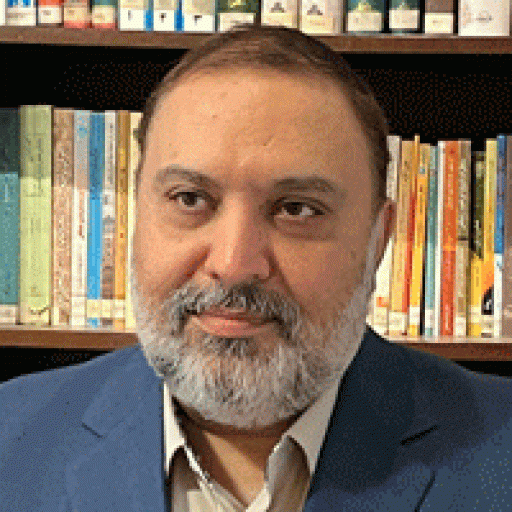
Lecture Text of Dr. Reza Gholami in the Seminar: Philosophy of Children in the Face of Artificial Intelligence: Opportunities and Threats
Date: December 12, 2024 – Venue: Iranian Wisdom House, Vienna
I would like to start my talk by looking at the state of thinking and reasoning in today’s world and reminding us of some important facts.
Expressing Concern About the Decline of Critical Thinking in the Modern World
“Today, in a world filled with noise from technology and consumerism, critical thinking and deep reflection seem to be pushed aside.”
As Theodor Adorno said:
“Popular culture, instead of awakening awareness, has become a tool of domination. The world is moving in a way that turns people into thoughtless consumers.”
Similarly, Herbert Marcuse observed:
“Modern society, by using technology, drives humans towards one-dimensionality, weakening their ability to think critically against ideologies.”
“These philosophers warned us decades ago about the danger we face today: turning humans into beings who focus only on consumption, speed, and superficiality instead of questioning and reflecting. Isn’t it time we bring thinking back to its rightful place?”
Let me take a moment to mention the concerns of the Frankfurt School, especially since I just quoted Adorno and Marcuse:
The Frankfurt School, through thinkers like Adorno and Marcuse, often warned about the dangers of technology, consumerism, and popular culture taking over. They believed that in modern societies, people could become shallow and lose their ability to ask questions or resist dominant ideas.
Reminding the Role of Philosophy in Reducing This Concern
“In a world where deep thinking and questioning are fading, philosophy can be a guiding light. Philosophy not only helps us understand the world better, but it also provides tools to resist superficiality.”
As Plato stated:
“An unexamined life is not worth living.”
This reminds us of the importance of critical thinking and questioning the meaning of life.
Kant added:
“Philosophy not only teaches us what to do but also how to think.”
This emphasizes that philosophy nurtures the mind.
Adorno also said:
“Philosophy exists to save truth from being forgotten.”
This highlights philosophy’s duty to combat shallow thinking and intellectual distractions.
“Today, philosophy can teach us how to step back from daily chaos, identify true values, and preserve our humanity amidst the confusion. Returning to philosophy is returning to the depths of our existence.”
The Importance of Philosophy for Children
“Philosophy is not just for adults; it is also valuable for children. It helps children develop independent thinking, analyze issues, and understand real values from an early age.”
“By learning philosophy, children discover how to ask questions instead of imitating, and how to explore the depth of matters. It helps them distinguish between personal benefit and true welfare and brings them closer to the truth.”
As Socrates said:
“Wonder is the beginning of wisdom.”
For children, philosophy is like Socratic questioning, guiding them toward a better understanding of life.
John Dewey emphasized:
“Education should teach children not just to collect facts but to think critically and creatively.”
This means philosophy for children turns their minds from merely consuming information to producing ideas.
Matthew Lipman, the founder of philosophy for children, stressed:
“Children need opportunities to ask deep questions more than they need ready-made answers.”
Teaching philosophy to children can also address concerns like those of the Frankfurt School. By encouraging critical thinking, imagination, and values, it helps children resist the shallow effects of technology and consumer culture.
“If we want a world where thinking, mutual understanding, and truth have special value, we must start with children. Philosophy helps children develop open minds, deep insights, and a questioning spirit. These are the seeds for a brighter future.”
The Threat of Artificial Intelligence to Philosophy and Philosophy for Children
“Artificial intelligence, despite its benefits, poses a serious threat to philosophy, especially philosophy for children. If not managed properly, it could become a tool for making minds shallow instead of strengthening thinking.”
Reasons Why AI Threatens Philosophy and Children:
- Over-reliance on ready answers:
AI gives quick and ready answers, stopping children from questioning and thinking deeply.
- Replacing human interaction with technology:
Philosophy relies on human dialogue and shared experiences. AI could reduce this interaction, taking away essential skills like critical thinking and communication.
- Encouraging mental consumption:
Instead of promoting creativity and analysis, AI often pushes people to consume pre-made content without thinking critically.
- Lack of understanding human values:
AI cannot grasp ethics and truth deeply, so it cannot replace the human approach to philosophy.
“If philosophy, especially for children, aims to nurture questioning and reflective minds, we must ensure AI supports rather than hinders this goal. The future of philosophy depends on teaching critical thinking, not replacing it with technology.”
Using AI to Support Philosophy for Children
“Although AI poses challenges to deep thinking, it can also be a powerful tool to enhance philosophy for children if used creatively and intentionally.”
Solutions and Examples:
- Interactive Spaces for Questioning:
AI can create learning environments where children are encouraged to ask philosophical questions. For example, an intelligent chatbot could ask counter-questions instead of giving direct answers, encouraging deeper thought.
Example: A chatbot could ask, “Why do you think fairness matters? What happens if it doesn’t?”
- Simulating Socratic Dialogues:
AI can help children practice philosophical questioning by engaging in simulated conversations that teach logical reasoning and challenge ideas.
- Designing Philosophical Games:
AI can develop educational games where children explore ethical concepts, freedom, or truth through choices and consequences.
Example: A game where children make ethical decisions and examine their outcomes.
- Tailored Philosophical Resources:
AI can adjust philosophical content to match a child’s age, interests, and understanding, making complex ideas simple and engaging.
- Analyzing and Giving Feedback:
AI tools can analyze children’s thoughts and responses, providing feedback to guide them toward deeper thinking.
“AI, if guided correctly, can complement philosophy for children rather than replace it. By using this technology creatively, we can nurture curious and reflective minds prepared for modern challenges.”
Key Roles of Technology Leaders, Parents, and Educators:
“AI is a powerful tool that can be both a threat and an opportunity. To ensure it supports philosophy for children rather than undermines it, collaboration is needed among technology leaders, parents, and educators.”
Responsibilities of Stakeholders:
- Technology Leaders:
“They must design tools that encourage questioning, critical thinking, and philosophical discussions in children. For example, they can create apps and platforms that present children with interesting philosophical challenges.”
As an example: Apps that encourage children to think about justice, truth, or friendship through storytelling or interactive questions.
- Parents:
“Parents should use AI tools mindfully, helping their children use them for learning and thinking instead of shallow entertainment.”
For instance: Parents can explore philosophical chatbots with their children and discuss the questions together.
- Educators:
“Teachers can use AI as a complement to philosophy programs for children. These tools can strengthen critical and creative thinking in classrooms.”
For example: Schools could host workshops where students use AI to simulate Socratic dialogues or ethical decision-making scenarios.
Final Thought:
“Philosophy for children shapes the future, and AI can help strengthen it. But achieving this requires creativity, awareness, and cooperation between technology leaders, parents, and educators. Only then can we ensure this technology becomes a tool for deeper thinking in children.”
Thank you for your attention!