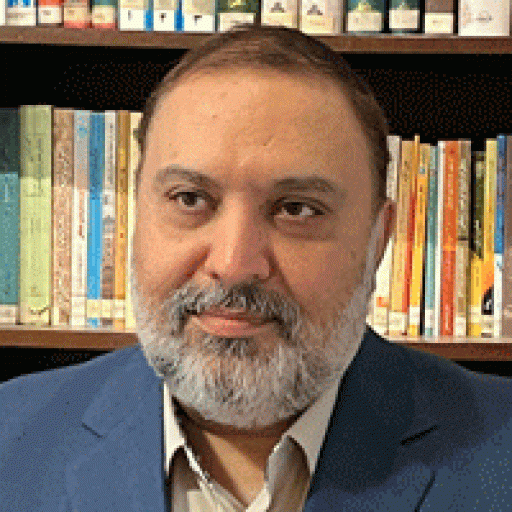
Dr. Reza Gholami’ Speech in the conference of Family-oriented Policy for Sustainable development, May 17, 2025 – UPF Austria, Family Federation for world Peace, Austrian’ Women Federation and Iranian Wisdom House – Vienna
Intercultural Philosophy for Embracing Cultural Diversity in Family Policies: A Path to Sustainable Development
I’m truly delighted to be here. I honor International Family Day. The family is the core unit and ensures the survival of human society. Sadly, the family has been rapidly weakening over the past decades.
In my view, saving and strengthening the family requires making it the main pillar of sustainable development. These events offer a great opportunity to explore ways to strengthen the family, and I would like to proudly and sincerely thank Esteemed Mr. Peter Haider and Esteemed Ms. Mag. Elisabeth Cook for organizing this conference.
You might ask, What Is Intercultural Philosophy and Who Are Its Famous Thinkers?
Intercultural philosophy is about how people from different cultures share ideas and learn from each other. It’s all about understanding and respecting differences to find things we have in common. Some famous thinkers helped create this field: Friedrich Schleiermacher studied how we understand writings from other cultures, Martin Buber focused on building connections through “I and You,” and Hans-Georg Gadamer looked at understanding between cultures. Today, Raimon Panikkar explores how cultures mix in a global world, and Wolfgang Welsch talks about “blended cultures” to show how cultures come together in modern times.
Why Cultural Diversity Matters in Today’s World
Cultural diversity is the key to sustainable development and global growth. It sparks creativity, helps us adapt, and brings fresh ideas. But there’s a problem: some Powers might try to push their culture and way of living onto the whole world. This could hurt the variety of cultures we have and make it harder to find new ways to solve global issues. Intercultural philosophy teaches us that talking and understanding each other, instead of arguing and conflicting, is the best way to fix this.
You might ask, What Does Cultural Diversity in Families Mean?
Cultural diversity in families means accepting that families in different places live in their own unique ways. They have different values, setups, and lifestyles. For example, in Iran, we see many kinds of families: some are nomads who live close to nature, some city families mix old traditions with modern life, some families follow religious values and some families in border areas blend different cultures together. This variety shows how families can change while still holding onto who they are.
But about the Problems of Forcing One Culture on the World
When one culture is forced on everyone, it creates big issues. It lowers the variety of cultures, weakens local traditions, and makes sustainable development tougher. If a single culture takes over, communities might lose their old knowledge and ways of living, which are really important for solving global problems. Intercultural philosophy warns that this can cause pushback, tension, or even fights. For example, when some powerful countries’ lifestyles were forced on some places, people strongly resisted.
How Diversity and Variety Help Sustainable Development?
Having lots of different cultures helps sustainable development in many ways:
First: Adapting and Creating: Different cultures come up with new ideas to solve big problems, like social hurms.
Second: Keeping Traditions Alive: Accepting variety protects local cultures and knowledge, which we need for a sustainable future.
Third: Bringing People Together: Variety helps people understand and work with each other, which leads to lasting peace.
Even in the idea of sustainable development, we need to think about variety and differences. We should avoid forcing one model of development or closing the door on diversity. Sustainable development can have many models based on cultural variety, while still keeping its main goals. Thinkers like Gadamer say that having different cultures isn’t a problem—it makes our ideas better and helps us connect with the world.
I would like to offer some examples of Good Family Diversity in Iran:
In Iran, we can see how different kinds of families help sustainability:
First: Nomadic Families: They use old methods to take care of the environment, like moving with the seasons to save the land.
Second: City Families: They mix some good traditions with modern conditions.
Third: Multicultural Families: In border areas like Kurdistan or Sistan-Baluchistan, families combine cultures and live peacefully together.
These examples show how different families can help sustainability and handle change well.
You might ask: How Policies and orders Can Support Cultural Diversity
Policies and orders should accept and help different kinds of families. Flexible rules, along with education and involving people locally and globally, can make variety stronger and get communities ready for a sustainable future. For example, teaching kids in different languages or supporting local traditions can protect diversity. Intercultural philosophy says policies and orders should let cultures talk to each other, not force everyone to follow one way.
As a Conclusion:
Cultural diversity is a treasure for building a sustainable and fair world. We need to stop any culture from being forced on others and support variety to protect local traditions and encourage teamwork around the world. Diversity in families, along with respecting human rights, fairness, and personal freedoms, helps sustainable development. It’s clear that we shouldn’t let some small cultural groups use the excuse of tradition to take away rights from family members, especially women and children, or block personal freedoms that help people grow and show their talents. To stop this, using the Universal Declaration of Human Rights as a strong guide is very important, even though the Declaration itself needs some updates. Thinkers like Martin Buber remind us that valuing differences is the way to a peaceful and balanced world.
Let’s work together to protect diversity for a brighter future for everyone.
thank you for your attention.