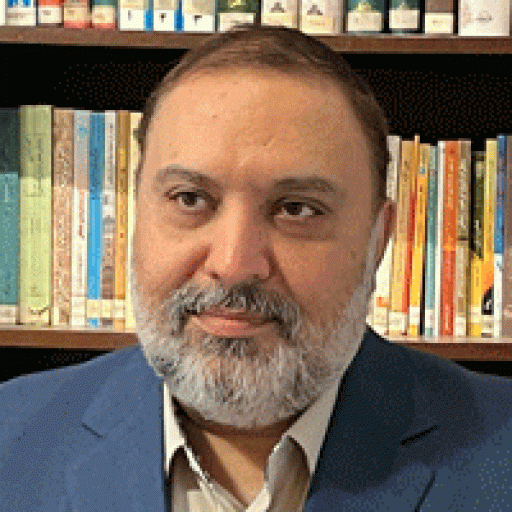
A Look at Reza Gholami’s Paper at the 47th International Wittgenstein Symposium
The 47th International Wittgenstein Symposium took place from August 9 to 15, 2026, in the town of Kirchberg am Wechsel, Austria, organized by the Austrian Ludwig Wittgenstein Society. This year’s symposium was called “50 Years Wittgenstein Symposium,” marking fifty years since this scholarly tradition began. It brought together philosophy researchers and professors from many countries. During the event, Reza Gholami presented a scholarly paper that looked at one of the hardest questions raised by Wittgenstein’s later philosophy of language: can universal political ideas — like justice and freedom — be based on his theory of “language-games”? His main question was simple but deep: can meaning that comes from many different, local ways of life still support fair moral and political judgment across all of them? Or does this theory rule out any judgment that crosses cultures?
Gholami began by noting that Wittgenstein’s idea — that meaning comes from shared human practices, not from fixed abstract ideas — has been useful for political philosophy. It helps guard against oversimplified views of concepts like justice and freedom. Still, Gholami argued, this idea alone does not tell us how to handle a world where different ways of life are no longer separate from each other.
Four Voices, One Shared Challenge
Gholami built his talk mainly around two thinkers, Leo Strauss and Anthony Quinton, but also brought in Kant, Rawls, and other interpreters of Wittgenstein to give a fuller picture. Strauss, drawing on the idea of “natural right,” argued that we can and must search for standards of justice that go beyond any one culture or time period. He supported this by attacking historicism — the view that all truth simply changes with history — and claimed this view defeats itself. Kant, by contrast, looked for universal standards not in a fixed human nature, but in the very structure of practical reason itself. John Rawls moved over time: his early work (“A Theory of Justice”) still followed Kant’s approach, but his later work (“Political Liberalism”) shifted toward a more modest, tradition-based agreement. Gholami noted that this later Rawls comes closer to Quinton’s way of thinking. Finally, Anthony Quinton took a middle path: while he accepted that political life is shaped by history and tradition, he still believed traditions could be compared and judged using reason — he grounded political legitimacy in human experience rather than abstract principles.
Language-Games and the Problem of Circular Standards
Gholami then showed that Wittgenstein’s position is more extreme than all four of these views. Based on sections 241 and 242 of the *Philosophical Investigations*, agreement in a “form of life” and agreement in judgments are needed before any shared language can work. This means no standard outside a language-game can judge that game’s meaning. Gholami pointed out that even Wittgenstein’s own idea of “family resemblance” — used to explain how concepts like “game” hang together without one fixed definition — runs into the same problem: without a clear rule for telling relevant similarities from irrelevant ones, this idea becomes just another form of relativism. Gholami called this deeper issue the “regress of criteria”: any standard used to judge other standards needs its own justification, and this chain never reaches a final stopping point.
A Dilemma with No Easy Way Out
A large part of the talk explained what Gholami called “Wittgenstein’s dilemma.” Either the standard for judgment lives only inside each form of life — meaning no judgment across cultures is possible — or we assume a standard outside language-games, which then breaks Wittgenstein’s own theory. Gholami used real examples, like apartheid South Africa and the Universal Declaration of Human Rights, to show why this dilemma matters for today’s discussions of human rights and global justice. He also reviewed three well-known attempts to defend Wittgenstein from the charge of relativism — by Peter Winch, Stanley Cavell, and Hanna Pitkin — and concluded that none of them solved the problem of circular standards.
Rethinking Wittgenstein’s Role, Not Rejecting Him
Even so, Gholami’s talk did not end by fully rejecting Wittgenstein’s ideas. He suggested that Wittgenstein’s method is still useful for clearing up confusion in political concepts. But for real moral judgment, he said, we need other tools: Rawls’s later idea of “overlapping consensus,” Habermas’s “discourse ethics,” and Amartya Sen’s “capabilities approach.” According to Gholami, these approaches keep a careful, limited claim to universal standards without relying on old-style metaphysics. He also noted that globalization — with different ways of life now constantly meeting and mixing — creates a new need for standards that go beyond simple “family resemblance,” a need that a basic reading of language-game theory cannot meet.
Conclusion
Gholami closed by saying that Wittgenstein’s theory may not be able to support universal political claims. But its deeper lesson — that we should never take universal truth for granted, and must instead earn it through dialogue, history, and careful thought — remains valuable for political philosophy. As he put it, Wittgenstein is a useful teacher for political philosophy, but not a replacement for it.
The presentation ended with a question-and-answer discussion between Gholami and the audience.