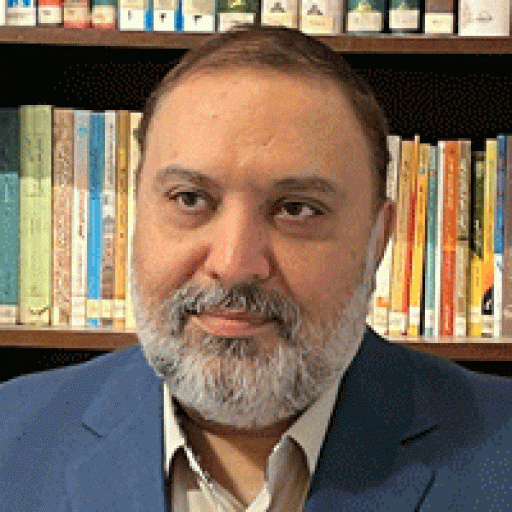
Speech by Dr. Reza Gholami, Fourth Symposium on Iranian Studies, 14 August 2026, Iranian Wisdom House, Vienna
Good evening, everyone, and thank you for your contributions.
My speech takes a somewhat different approach. This evening, I would not like to talk about Ferdowsi and nationalism. Instead, I would like to explore Ferdowsi and a form of interculturalism.
Introduction: Why “Intercultural”?
In today’s discourse, multiculturalism usually means the coexistence of different ethnic and cultural groups alongside one another. Interculturality, however, goes further. It means active dialogue, mutual influence, recognizing the other as an equal subject, moving beyond ethnic self-centeredness, and reaching a new combination or synthesis.
If we look at the Shahnameh through this perspective, its deeper layers show that Ferdowsi was not only a national poet, but also a thinker with a strong intercultural orientation. At the same time, we should remember that the Shahnameh is also a national epic, and nationalist readings of it are certainly possible.
1. Wisdom: A Common Language among Cultures
Every intercultural dialogue needs a common horizon. In contemporary thought, this common horizon is sometimes called human rights or communicative rationality.
In the Shahnameh, this common horizon is wisdom.
Wisdom does not recognize cultural or geographical borders in the Shahnameh. It is a standard for judging human beings—whether they are from Iran, Turan, India, or Rome.
When a Turanian figure such as Piran Viseh acts wisely, he reaches one of the highest human positions. But when an Iranian king such as Kay Kavus acts without wisdom, Ferdowsi strongly criticizes him and presents him as a deeply flawed ruler.
In this way, truth does not belong exclusively to one particular culture. It is sought in between cultures, within the shared horizon of wisdom.
Ferdowsi begins his discussion of wisdom with these famous lines:
کنون ای خردمند وصف خرد
بدین جایگه گفتن اندر خورد
کنون تا چه داری بیار از خرد
که گوش نیوشنده زو بر خورد
It means:
Now, O wise one, it is fitting here to speak about wisdom;
Bring forth whatever you have of wisdom,
So that the listening ear may benefit from it.
Ferdowsi then says:
خرد بهتر از هر چه ایزد بداد
ستایش خرد را به از راه داد
This means:
Wisdom is better than everything that God has given;
To praise wisdom is the best and most just thing to do.
He continues:
خرد رهنمای و خرد دلگشای
خرد دست گیرد به هر دو سرای
It means:
Wisdom is our guide, and wisdom opens the heart;
Wisdom takes us by the hand in both worlds.
These verses present wisdom as a universal human standard rather than the possession of one particular people or culture.
Another important passage says:
بیا تا جهان را به بد نسپریم
به کوشش همه دست نیکی بریم
نباشد همی نیک و بد پایدار
همان به که نیکی بود یادگار
The poem means:
Come, let us not surrender the world to evil;
Let us all work together to do good.
Good and evil do not remain forever;
Better that what remains behind us is goodness.
Here, the standard is wisdom and goodness, not ancestry or territory.
2. Moving Beyond Ethnic Division and Greed
One of the biggest problems in understanding other cultures is splitting people into “us” and “them.” Many old stories say, “Our group is naturally good,” and “Other groups are naturally bad.”
Ferdowsi’s Shahnameh breaks this simple idea. In his epic, the line between good and evil is not a border between Iran and Turan. Evil does not belong to one nation, and goodness does not belong to another. Instead, the real enemies are human greed, pride, and ignorance—flaws that can exist in any leader or person.
Ferdowsi reminds us that true understanding comes from growing inner wisdom and a clear mind, not from blind loyalty to our own ethnic group:
ز گفتار دهقان و از پهلوان
خرد را بیارای و روشن روان
خرد چشم جان است، چون بنگری
تو بی چشم، شادان جهان نسپری
This means:
From the words of sages and heroes,
Adorn your mind and brighten your soul.
Wisdom is the eye of the soul, if you truly look;
Without this eye, you cannot journey happily through the world.
Also, in the story of Prince Iraj, Ferdowsi shows that peace and human life are worth more than land or national pride:
من ایران نخواهم نه خاور نه چی
نه شاهی نه گسترده روی زمین
بزرگی که فرجام او تیرگیست
بر آن مهتری بر بباید گریست
It means:
I want neither Iran, nor the East, nor China,
Neither kingship, nor vast lands across the earth.
A greatness whose end is darkness—
Upon such power, one can only weep.
Through these stories, Ferdowsi teaches us that overcoming greed and valuing human life is far more important than fighting over borders or claiming national superiority.
3. Zal and Rudabeh: The Victory of Dialogue over Racial Prejudice
The love story of Zal and Rudabeh is one of the most remarkable intercultural stories in classical literature.
The priests and courtiers represent a closed and prejudiced way of thinking. Rudabeh’s ancestry goes back to Zahhak, and they consider this relationship a disaster.
But Zal represents intercultural thinking.
Through reasoning, correspondence, and his emphasis on wisdom and the inner worth of the human being, Zal finally persuades Manuchehr that true nobility does not come simply from ancestry or from historical hatred.
Ferdowsi shows that one of the greatest achievements of the Iranian epic tradition—the birth of Rostam—depends on this intercultural union and on overcoming racial prejudice.
Ferdowsi also says:
ببخش و بخور هر چه آید فراز
بدین تاج و تخت سپنجی مناز
This means:
Give freely and enjoy whatever comes your way;
Do not take pride in this temporary crown and throne.
The emphasis here is on generosity and on the temporary nature of worldly power.
Another passage says:
توانگر شوی گر تو درویش را
کنی شادمان مردم خویش را
It means:
You become rich when you help the poor;
You become truly fortunate when you make your people happy.
This is an important ethical idea: true richness is not only having wealth, but also making others happy.
4. Siavash-Gerd: An Ideal City of Cultural Synthesis
In intercultural philosophy, the highest form of interaction is reaching a synthesis—a point where two cultures create something new together.
Siavash, an Iranian prince, escapes to Turan because of injustice. There, he does not simply disappear into Turanian culture, but neither does he reject it.
He marries the daughter of the king of Turan and builds a city called Siavash-Gerd.
This city can be seen as a symbol of an intercultural ideal city. It is built with Iranian art and architecture, but on Turanian land and with the participation of Turanian people.
The great tragedy of the Shahnameh—the killing of Siavash—takes place when nationalist extremists in Turan, especially Garsivaz, destroy this intercultural bridge.
Ferdowsi says:
بکوشید تا رنجها کم کنید
دل غمگنان شاد و بیغم کنید
This means:
Work together to reduce suffering;
Make the hearts of those who suffer happy and free from sorrow.
This is an invitation to reduce shared suffering and create collective happiness. These lines appear in the Shahnameh in the reign of Bahram Gur.
Ferdowsi also says:
جهان سر به سر حکمت و عبرت است
چرا بهرهٔ ما همه غفلت است؟
The poem means:
The whole world is full of wisdom and lessons;
Why is our share of it only heedlessness?
This is an invitation to moral and intellectual awakening beyond cultural and political borders. The verse is associated with the story of Siavash.
5. Humanism and Universal Ethics: The Foundation of Interculturality
The Shahnameh is full of humanistic ideas: goodwill, kindness, love, generosity, justice, and resistance to oppression.
These values provide a strong foundation for global reconciliation and peaceful coexistence.
Ferdowsi repeatedly emphasizes the need to help the poor and the helpless, to care for people who are suffering, and to avoid harming others. He considers not causing harm one of the highest human virtues.
He says:
بهر جایگه یار درویش باش
همه راد با مردم خویش باش
It means:
Wherever you are, be a friend to the poor;
Be generous and open-handed toward your people.
This advice is given by Kay Khosrow and places generosity and care for the vulnerable among the duties of a good ruler.
Ferdowsi also draws attention to people who have lost their wealth and become socially vulnerable:
کسی را که نام است و دینار نیست
به بازارگانی کسش یار نیست
This means:
Someone may have a good name but no money;
Then no one in the marketplace will stand with him in business.
This passage appears in the context of a broader discussion of people who need social support, including the poor, the elderly, orphans, and women without protection.
This shows Ferdowsi’s concern not only with wealth, but also with human dignity and social responsibility.
6. A Necessary Balance: A National Epic and Multiple Readings
The Shahnameh is, at the same time, a national epic, and it clearly contains distinctions between Iran and Aniran, or the non-Iranian world.
However, discourse studies show that this construction of the “other” is not completely black and white. It has a gray character, and the other is never completely excluded.
Therefore, an intercultural reading of the Shahnameh should recognize this duality and avoid extreme generalizations.
In this way, such a reading remains faithful to the text and also avoids the accusation of simply imposing a meaning on the text.
The Shahnameh contains clear ideas of Iranian identity and loyalty to the homeland. But at the same time, moral qualities are not limited to one ethnic group.
A person from the “other” side can be wise, generous, loyal, and honorable, while an Iranian king can be foolish, unjust, or driven by greed.
This is precisely where an intercultural reading becomes possible.
Conclusion: The Shahname as an Invitation to Mutual Understanding
If we define intercultural thinking as seeing the world through the eyes of the other, engaging in critical dialogue, and trying to find a common truth beyond the boundaries of blood and ancestry, then Ferdowsi’s Shahnameh should not be understood simply as a nationalist manifesto for the superiority of one ethnic group.
Rather, it can also be read as a great reflection on human suffering caused by the absence of mutual understanding.
In every story, Ferdowsi invites the reader to step down from the ivory tower of the self and recognize the humanity of the other.
This invitation remains deeply relevant today, especially in contemporary discussions of intercultural dialogue.
The Shahnameh therefore gives us an important message:
Wisdom has no ethnic border. Human dignity has no geographical border. And dialogue can build bridges where prejudice builds walls.
Thank you for your attention.