A Journey of Self-Reflection, Spirituality, and Dialogue
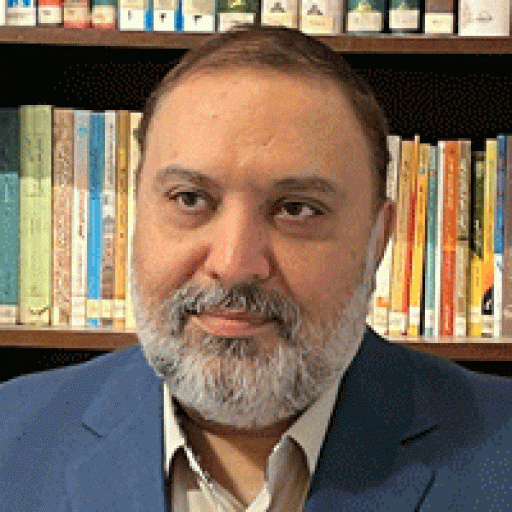
Speech by Dr. Reza Gholami
Opening Ceremony of the Arbaeen Pilgrimage and the Camino de Santiago Photo Exhibition
31 July 2026
Iranian Wisdom House, Vienna
Good evening, everyone. Thank you very much for joining us this evening.
Religious pilgrimages on foot, both in the Islamic and Christian traditions, are exceptional opportunities in human life.
They give us a chance to return to ourselves and to begin thinking deeply about our lives. As we walk, we may ask ourselves: Where have I come from? Why am I in this world? And where will I go after death? These are some of the most important questions that arise when we begin to think deeply about ourselves and our lives.
But self-reflection does not end with these questions. In the next step, we try to look back at our lives. We think about our choices, our actions, our successes, and our mistakes. We may also make important decisions about our future.
Perhaps one of the greatest benefits of such a journey is that we can, for a while, step away from the speed and pressure of everyday life and have the opportunity to speak more honestly with ourselves.
Another important part of self-reflection is thinking about our relationship with God—the God who, in religious traditions, is seen as the source of all goodness and perfection.
Human beings cannot reach their full potential without looking beyond themselves and moving toward perfection.
To come closer to God, we need both God’s grace and our own effort. We must take steps ourselves, but, in the religious view, our efforts are always accompanied by hope in God’s grace.
The more sincere, deep, and moral our efforts are, the more prepared we become to receive this grace.
But what does successful effort mean?
Successful effort does not simply mean becoming more powerful, richer, or more successful in the material sense. Successful effort is an effort that makes us more moral. It makes us kinder, more humble, more patient, more caring, and more responsible.
Living an ethical life is the gateway to the path toward God. Those who walk on this path should try to have a purer heart and show more love, justice, forgiveness, and care for others in their daily lives.
From this point of view, religious pilgrimages on foot are not only physical movement along a geographical path. They are also a kind of practice for living an ethical life.
They are a practice of kindness, forgiveness, sacrifice, patience, and caring for others.
In the great Arbaeen pilgrimage, we can clearly see many examples of ethical life: welcoming pilgrims, serving others without expecting anything in return, generosity, empathy, and helping people whom we may not even know.
Along this path, many people, even with limited resources, serve others with love and sincerity.
For us as Shia Muslims, it is a great source of pride that every year nearly twenty million people take part in the approximately 80-kilometre Arbaeen pilgrimage. I hope that these spiritual pilgrimages will become even larger every year. These pilgrimages give us hope for the growth and spread of spirituality in the world.
Allow me to say here, in parentheses, that I would like to sincerely thank the people and the government of Iraq for supporting and developing this great Islamic-Shia tradition, and for their unparalleled hospitality, which is a beautiful outcome of this tradition.
I am sure that our Christian brothers and sisters also experience similar examples of human solidarity, spirituality, patience, friendship, and ethical living on Christian pilgrimage routes, including the Camino de Santiago, or the Way of Saint James.
Here, our religious and historical differences are not obstacles to dialogue. On the contrary, they can help us understand one another more deeply.
We come from different traditions, but we share many important human questions: questions about the meaning of life, the relationship between human beings and God, moral responsibility, suffering, death, hope, and the future of humanity.
Religious pilgrimages on foot take us, for a time, away from a life that is only material and from the fast pace of everyday life. In a modern world that can sometimes become too materialistic, too fast, and too focused on consumption, they bring us into a spiritual space and offer us a different way of seeing life.
This change of place and change of perspective can itself be a great event in a person’s life. Human beings need not only to care for their material needs but also to keep their spirit alive and strong. Religion, spirituality, reflection, and human relationships can all play an important role in this.
For this reason, I am very happy that this exhibition brings together images of two great traditions of religious pilgrimage: the great Arbaeen pilgrimage of Imam Hussein and the Christian pilgrimage along the Way of Saint James.
This exhibition reminds us that sometimes a photograph can build a bridge between two religious and cultural traditions.
These two journeys are different in their history, geography, and religious traditions. But in both of them, human beings are searching for meaning, truth, God, and their own true selves.
The meeting of these two pilgrimages creates new opportunities for dialogue between Islam and Christianity.
This dialogue should not be based on removing our differences. It should be based on mutual understanding, respect, shared human experiences, and cooperation to build a more ethical and spiritual world.
Today, in a world where people are closer to one another than ever before, but sometimes feel spiritually and humanly more distant from one another, we need such dialogues more than ever.
Perhaps we can say that both of these paths, despite all their differences, remind us that life is not only about reaching a destination. The journey itself is also part of the meaning.
And perhaps the most important question is this:
When we return from this journey, are we the same people we were before?
Or have we become kinder, more ethical, more spiritual, and more responsible?
If a religious pilgrimage can bring about such a change in a human being, then it is not only a journey through geography.
It is a journey from our limited selves toward becoming better and more complete human beings.
Thank you very much for your attention. God bless you all.