Thursday, 25 July 2024, 12:30-14:30 (Vienna time), Iranian Wisdom House in Vienna
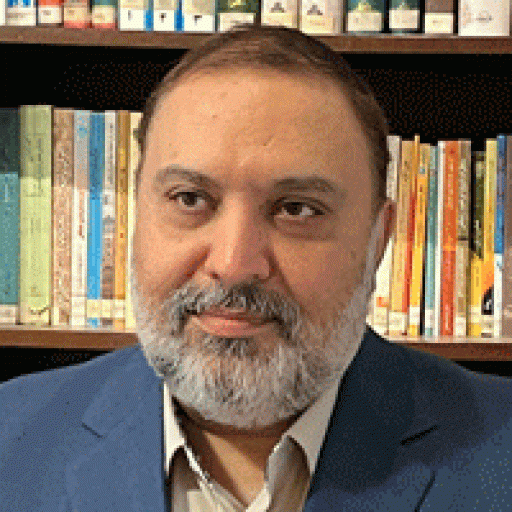
“Introductory Speech by Dr. Reza Gholami, Chair of the Session:”
In the name of Allah, the Compassionate, the Merciful
Greetings to all, and welcome to everyone joining this meeting, whether online or in person. I am Dr. Reza Gholami, Chair of today’s session. I hope you are all well and in high spirits. Thank you for attending this significant discussion, and a special thanks to our speakers for their contributions.
As you know, artificial intelligence, in convergence with new technologies—particularly information and communication technologies and digitalization—is driving a profound revolution worldwide. Without exaggeration, AI marks the beginning of a new human civilization.
At first glance, it’s tempting to remain optimistic and focus solely on the unique opportunities AI brings. However, realism urges us to take a more balanced view, acknowledging the serious threats that AI may pose to humanity. Even some leaders of AI development labs have expressed concern over the potential negative consequences of AI. I would like to highlight a few key concerns here:
- Employment Impact: A widely discussed question today is whether AI will lead to widespread job displacement by performing tasks previously carried out by humans. Beyond job survival, a more pressing issue is human agency—what role will human beings play in an AI-transformed society?
- Control and Oversight: How should AI be regulated, and who will be responsible for monitoring it? These are critical questions facing experts. The issue isn’t only about controlling AI but also about preventing its misuse. By what global standards can AI be governed, and can we ensure that it won’t fall under the control of malicious actors?
- Limits of AI Intelligence: Some argue that AI will never surpass human intelligence and that concerns over an “intelligence explosion” stem from misunderstandings of intelligence itself. However, a substantial group of scientists caution against underestimating this potential, suggesting that AI might indeed exceed human control.
- Freedom of Choice: Will individuals be compelled to adopt AI technology in their daily lives? Or will there be a right to opt out? As we’ve seen with the internet, avoiding certain technologies becomes increasingly difficult.
- Global Disparities: The paths taken by highly industrialized nations to achieve AI capabilities may not be accessible to others, creating a new divide between countries with advanced AI technology and those without. This gap is likely to have serious and potentially destabilizing consequences.
Fortunately, European universities, including those in Austria, are researching the human implications of AI, and there is promising work beginning in Iran as well. Before coming to Vienna, I was involved in several important studies on this topic in Iran.
***
Concluding Reflections on Our Session
In Iran, we have several leading researchers exploring AI from cultural and humanistic perspectives, though we still have some distance to reach the forefront in these areas. Progress in this field often begins with addressing immediate, tangible challenges.
While I won’t attempt a formal conclusion, I would like to acknowledge that the diverse topics covered today defy easy summarization. The lectures, discussions, and Q&A session highlighted the complexities of AI and its profound implications on human life and relationships. AI holds the power to expand human freedom, justice, and well-being, but it could also impose restrictions on these values and present threats to both human and planetary security. I believe that, ultimately, the global community may manage to achieve some level of control over AI—albeit relatively.
The discussions today reflected a realistic perspective, addressing critical concerns surrounding AI. I would like to thank once again all who attended, especially our three speakers. I look forward to continuing this important conversation with you in future meetings.
Have a wonderful day.